
25 Best Historical Sites in Richmondtown
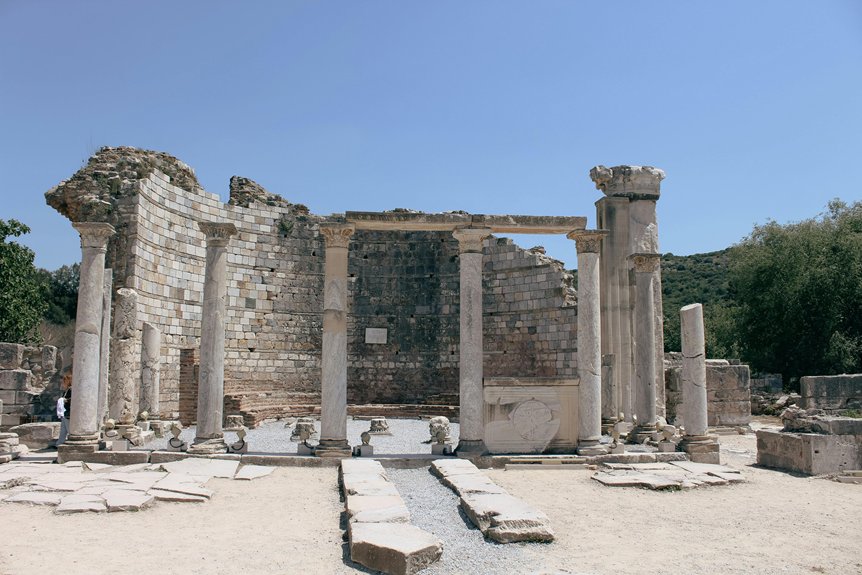
You’ll explore Richmondtown’s rich history through its top 25 sites, starting with the Voorlezer’s House, New York’s oldest schoolhouse. From Dutch Colonial gems like the Guyon-Lake-Tysen House to resilient structures such as the Billiou-Stillwell-Perine House, these landmarks offer authentic glimpses of early America. There’s more waiting to reveal the full story.
Historic Richmond Town Village
Historic Richmond Town Village sits in Staten Island, New York, as a living museum that preserves over 30 buildings from the 17th to 19th centuries.
You explore its village architecture, where historic preservation techniques carefully restore original materials and designs to maintain authenticity.
This approach guarantees structures reflect early American life, allowing you to walk through meticulously maintained buildings that showcase community evolution and craftsmanship in vivid detail.
Voorlezer’s House
Dating back to 1696, Voorlezer’s House serves as New York’s oldest schoolhouse, where the community’s first schoolmaster taught lessons in a simple, two-room structure.
As you explore, you’ll grasp Voorlezer’s significance in early education, symbolizing community learning.
Its architectural features—timber framing, shingled roof, and modest layout—reflect 17th-century Dutch influences, letting you experience authentic colonial craftsmanship.
Guyon-Lake-Tysen House
The Guyon-Lake-Tysen House, built around 1747, represents a well-preserved example of Dutch Colonial architecture in Richmondtown.
As you explore, you’ll discover Guyon Lake’s historical legacy and Tysen Architecture’s distinctive features, which underscore its historic significance.
Restoration efforts have meticulously revived the structure, letting you experience authentic 18th-century details and immerse in its cultural story firsthand.
Billiou-Stillwell-Perine House
As one of Richmondtown’s earliest structures, built in 1663 by French Huguenot Pierre Billiou, the Billiou-Stillwell-Perine House embodies the resilience of colonial settlers.
You’ll explore its Billiou Stillwell features, showcasing Historical Architecture from Staten Island’s Colonial History, including timber framing and stone foundations.
These details let you witness early settlers’ ingenuity, offering a vivid glimpse into 17th-century life on the island.
The Old Village Green
Moving from the Billiou-Stillwell-Perine House, you’ll discover the Old Village Green, a central open space in Richmondtown that dates to the 17th century and once hosted community events.
You’ll find this green space rich in village history. Here’s a quick look:
- It showcases early colonial layouts that defined village history.
- The area hosted markets, fostering community bonds in the past.
- Preserved trees and paths highlight its enduring green space appeal.
- You can stroll and appreciate artifacts tied to local heritage.
Richmond County Courthouse
One significant landmark nearby is the Richmond County Courthouse, built in 1837 and serving as Staten Island’s seat of justice until 1894.
As you explore its halls, you’ll admire the elegant courtroom architecture with high ceilings and detailed woodwork, reflecting 19th-century design.
It embodies Staten Island’s legal history, where key trials shaped community laws and justice practices, giving you a tangible connection to the era’s judicial evolution.
Staten Island Museum
Near the Richmond County Courthouse, the Staten Island Museum showcases artifacts and exhibits that highlight the island’s history, art, and natural sciences.
As you explore, you’ll discover engaging elements of Staten Island History and Staten Island Art.
- Examine artifacts revealing early island settlements in Staten Island History.
- Admire diverse paintings and sculptures in Staten Island Art collections.
- Explore interactive displays on natural sciences and ecosystems.
- Attend talks that connect history, art, and culture for a fuller experience.
Blazing Star Ferry Site
While walking through Historic Richmond Town, you’ll encounter the Blazing Star Ferry Site, an 18th-century landing that facilitated key ferry crossings and trade routes.
Here, you’ll explore Blazing Star Ferry History, which highlights its pivotal role in colonial transportation and commerce.
The site features preserved dock remnants and interpretive displays, offering detailed insights into early ferry operations and their impact on local trade.
Kreischerville Historic District
Moving onward from the Blazing Star Ferry Site, you’ll discover the Kreischerville Historic District, a 19th-century industrial enclave in Staten Island that preserves the legacy of German immigrant Charles Kreisch and his ironworks.
As you explore, check out these:
- Kreischerville history, including the ironworks’ role in local development.
- Kreischerville architecture that reflects industrial-era design.
- Kreischerville landmarks like the factory ruins.
- Kreischerville community through heritage events and tours.
Alice Austen House
You’ll explore the Alice Austen House, a preserved Victorian cottage on Staten Island that served as the home and studio of pioneering photographer Alice Austen.
The house showcases her groundbreaking work in documentary photography from the late 19th century.
As you walk through, you’ll examine Alice Austen’s innovative photography techniques, appreciate their profound historical impact, and visit local exhibitions highlighting her contributions.
Conference House
After exploring Alice Austen House, you step into the Conference House, a 17th-century stone manor on Staten Island that served as the site of a 1776 peace conference during the American Revolutionary War.
As you visit, consider these highlights:
- Immerse yourself in Conference House history, focusing on the Revolutionary War events.
- Study Conference House architecture, with its enduring stone structure.
- Experience the authentic interiors.
- Ponder the historic failed peace negotiations.
Fort Wadsworth
Fort Wadsworth, a vast coastal fort on Staten Island, showcases America’s military heritage through its strategic defenses guarding New York Harbor.
You’ll investigate Fort Wadsworth History, exploring its 19th-century construction and pivotal World War roles in defending the harbor.
Join Fort Wadsworth Tours for guided walks through batteries and tunnels, where you can visualize soldiers’ lives and the fort’s enduring strategic significance.
Garibaldi-Meucci Museum
The Garibaldi-Meucci Museum in Richmondtown celebrates Giuseppe Garibaldi’s revolutionary legacy and Antonio Meucci’s inventive contributions, offering a glimpse into 19th-century Italian-American history.
When you visit, you’ll immerse yourself in Italian Heritage at the Garibaldi Museum by:
- Viewing artifacts from Garibaldi’s life and campaigns.
- Examining Meucci’s innovative inventions, like his early telephone designs.
- Learning about Italian immigrants’ struggles and triumphs.
- Participating in events that vividly bring this heritage to life.
Schoolhouse at Historic Richmond Town
As you explore Historic Richmond Town, the schoolhouse immerses you in 19th-century education, showcasing original furnishings and interactive exhibits that reveal how students learned in early America.
You’ll examine the schoolhouse’s architecture, featuring wooden structures and large windows that fostered focused learning, while it highlights education history through displays of teaching methods and student routines from the era.
Vanderbuilt Mausoleum
Adjacent to the historic grounds, you discover the Vanderbilt Mausoleum, an imposing granite structure that serves as the final resting place for members of the prominent Vanderbilt family.
As you explore, you’ll appreciate its features:
- The intricate mausoleum architecture with granite columns and ornate Victorian details.
- Elements embodying the Vanderbilt legacy, like family crests and historical inscriptions.
- Detailed carvings that showcase skilled craftsmanship from the era.
- A serene environment where you can reflect on their societal contributions.
St. Andrew’s Church
Moving from the Vanderbilt Mausoleum’s quiet reflections, you’ll find St. Andrew’s Church, a historic landmark in Richmondtown.
St. Andrew’s architecture showcases elegant Georgian style, with its simple brick exterior, tall steeple, and symmetrical facade that reflects 18th-century craftsmanship.
St. Andrew’s history traces to 1749, when it was constructed as a community worship site, preserving early colonial heritage for visitors to explore today.
Third County Courthouse
The Third County Courthouse, built in 1837, represents a cornerstone of Richmondtown’s judicial history.
As you visit, you’ll learn about third county courthouse history and architecture through these highlights:
- Explore third county courthouse history: It replaced earlier courthouses and hosted key trials shaping local laws.
- Examine third county courthouse architecture: The Federal style features symmetrical design and brick construction for durability.
- View its preserved elements: Original doors and windows offer a glimpse into 19th-century justice.
- Engage with exhibits: Interactive displays let you connect personally with its legacy.
Lake-Tysen House
Nestled in Richmondtown’s historic core, you encounter the Lake-Tysen House, a well-preserved 18th-century structure built around 1740 that exemplifies Dutch Colonial architecture and reflects the daily life of early settlers through its original features and artifacts.
You’ll discover fascinating Lake Tysen history, including the families’ stories, and appreciate Lake Tysen architecture with its distinctive gambrel roof and central chimney, preserving colonial heritage.
Voelcker’s General Store
Adjacent to the Lake-Tysen House, you’ll step into Voelcker’s General Store, a 19th-century establishment built around 1837 that offers a glimpse into early American commerce with its original counters, shelves, and goods, reflecting the daily transactions and community life of Richmondtown’s residents.
As you explore Voelcker’s history and architecture, don’t miss:
- Discovering Voelcker’s history as an essential trading post for locals.
- Admiring Voelcker’s architecture with its preserved wooden frame and counters.
- Viewing the original shelves that held everyday items.
- Experiencing how it mirrored 19th-century community interactions.
Richmond Town Print Shop
You step into the Richmond Town Print Shop, a reconstructed 19th-century facility that showcases early printing techniques through its authentic presses and tools.
Here, you’ll explore Richmondtown printing, witnessing historical printmaking processes like typesetting and ink pressing.
Demonstrations reveal how artisans crafted newspapers and posters, offering a vivid glimpse into 19th-century communication innovations.
Captain Lawrence House
The Captain Lawrence House, a meticulously restored 18th-century dwelling, embodies the legacy of a notable naval figure in early American history.
As you visit, you’ll appreciate its Architectural Significance in these ways:
- Examine the exquisite Georgian architecture, including symmetrical facades and detailed craftsmanship.
- Learn about Captain Lawrence’s heroic role in early US naval battles.
- View authentic period furnishings that highlight historical accuracy.
- Experience the preserved interiors that reflect 18th-century living.
Richmond Town Tavern
Richmond Town Tavern represents a faithfully restored 19th-century hub where colonial-era socializing comes alive through its original architecture and artifacts.
When you explore Richmond Town Tavern’s history, you’ll discover its establishment in the early 1800s as a key social gathering spot for locals.
Richmond Town Tavern’s architecture features authentic Federal-style design, including hand-hewn beams and period fireplaces that immerse you in the era’s ambiance.
This setup lets you interact with historical elements, evoking the past vividly.
The Old Stone House
One of the earliest surviving structures in the area, The Old Stone House dates to the 17th century and offers a glimpse into colonial life through its rugged stone walls and authentic interiors.
When you visit this site, you’ll truly enjoy:
- Exploring the Old Stone’s remarkable architectural significance and its profound historical importance.
- Learning about restoration efforts that address preservation challenges.
- Participating in educational programs revealing local legends.
- Immersing yourself in a great visitor experience.
Historic Richmond Town Blacksmith Shop
As you explore Historic Richmond Town, you’ll discover the Blacksmith Shop, a 19th-century structure where skilled artisans once forged essential tools and hardware.
Here, you’ll observe demonstrations of traditional blacksmith techniques, showcasing how craftsmen hammered and shaped iron using historical tools like anvils and forges.
This offers insight into everyday 19th-century life and craftsmanship.
The Richmond Town Meeting House
Another key landmark in Historic Richmond Town is the Meeting House, a well-preserved 19th-century structure that served as a hub for community gatherings and public debates.
As you visit this site, you’ll discover its charm through:
- The exquisite examples of Richmond Town’s architecture, featuring classic wooden designs.
- The profound historical significance of its role in local governance and events.
- The well-maintained interior that transports you back in time.
- Opportunities to learn and engage with the site’s history firsthand.
Final Thoughts
As you explore Richmondtown’s 25 best historical sites, you’ll uncover a vivid tapestry of early American history. From the Voorlezer’s House, New York’s oldest schoolhouse, to the Billiou-Stillwell-Perine House’s colonial resilience and the Guyon-Lake-Tysen House’s Dutch architecture, these landmarks offer detailed, authentic insights. Don’t miss the Conference House and Fort Wadsworth; they’ll enrich your understanding of the past in this enchanting destination.


